
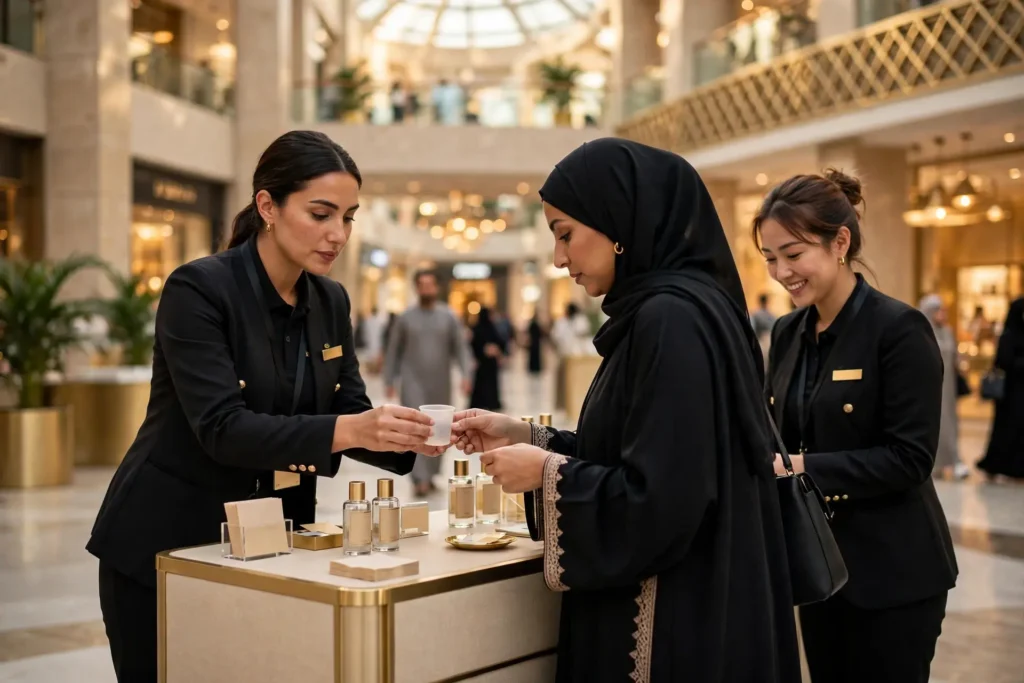
Brand activation ideas are formats that let people try a product in person instead of only seeing an ad. In Dubai, the formats brands book most often are mall sampling, in store demos, pop-ups, exhibition stand demos, prize games and roadshows, each picked by the action it needs to produce.
The format matters less than the fit. A small sampling counter in the right mall will outsell a large stand in the wrong one and it will do it at a fraction of the cost. A good idea gives a person a reason to stop and a clear next step before they walk away.
Dubai adds its own rules to that choice. Mall hours run long. Audiences switch between Arabic and English in the same conversation.
Outdoor formats struggle for much of the year. So the ideas below come with the part listicles usually skip, which is what each format needs on the ground to work at all.
Table of Contents
- Start with what the shopper can do in ten seconds
- Sampling, the idea that still carries most Dubai campaigns
- A pop-up that people walk into, not past
- Exhibition demos and launch nights need different ideas
- The prize game, with a permit check before you print anything
- A roadshow, briefly
- Which of these brand activation ideas should you pick?
- Frequently Asked Question
Start with what the shopper can do in ten seconds
Dubai mall work runs on a number most global lists never mention. A promoter has about ten seconds before a shopper moves on. That single fact should shape your format choice.
If your product needs a long explanation, a passing crowd is the wrong crowd. Put it where people already stand still, such as a demo counter, a stand at a trade show or a seated tasting. If your product explains itself in one taste or one spray, almost any busy location works, as long as the offer is clear from two metres away.
Global experiential marketing research has found that 85 percent of consumers are more likely to buy after taking part in a live brand experience. Treat that number with care. It comes from global survey data, not from UAE shoppers and it describes people who actually took part.
Footfall past your stand does not count. Participation does. That is why the strongest brand activation examples all share one trait. The visitor does something.
Counting that participation properly is its own skill and our guide to brand activation measurement walks through the tally sheets, QR codes and cost per lead maths behind it.
Sampling, the idea that still carries most Dubai campaigns

Product sampling looks plain on paper. In a mall it is hard to beat.
Place a small counter near the shelf or near a busy entrance. Keep the script to one benefit. End every chat with where the shopper can buy the product.
Food and drink work. Beauty and fragrance work. Household products work when the demo shows a result in seconds, such as a stain lifting or a scent lasting on skin.
The work sits with the staff. Trained promoters keep the queue moving, watch stock levels and record how many units they handed out and how many sales followed. One supervisor covers hygiene and restocking, plus the report at the end of the day.
Without that supervisor, a busy Saturday eats the stand. Samples run out at peak time, the counter stands empty during breaks, and nobody can tell you afterwards what the day produced.
A mall activation also suits products that need trust before purchase. A parent who watches a demo and asks two questions is close to buying. Only seeing a poster leaves a shopper far from that point.
In store sampling is the quieter cousin. The counter sits inside a supermarket or pharmacy, close to the shelf and the promoter points to the exact pack after the trial. Volumes are lower than in a mall atrium. Conversion is often better, because the product is within reach at the moment the shopper decides.
A pop-up that people walk into, not past
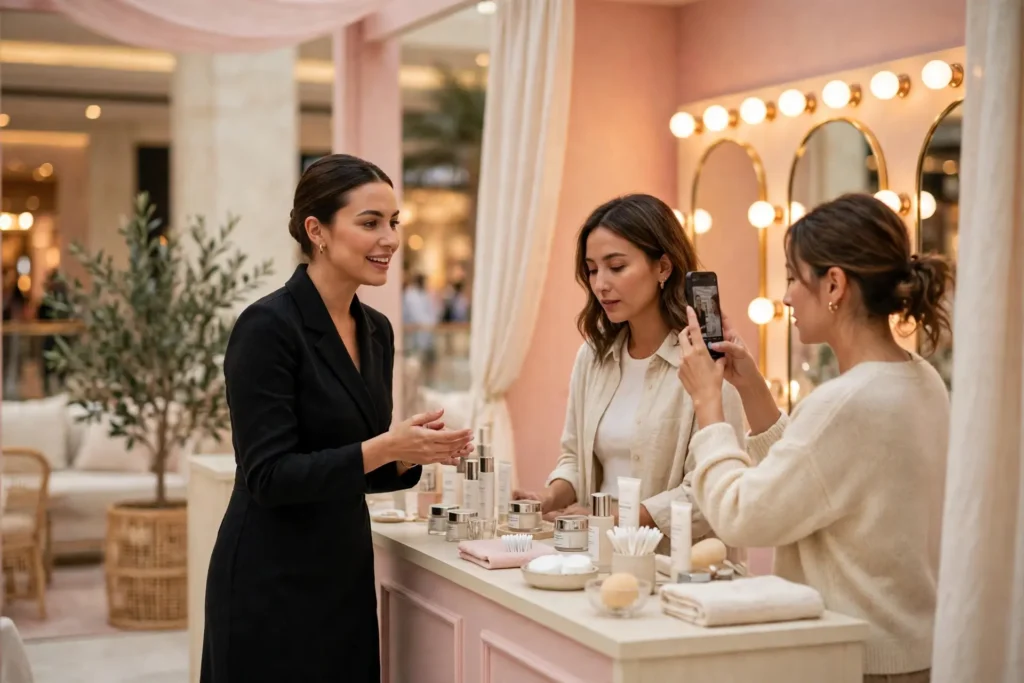
A pop-up earns its budget when the product needs a short story. Skincare and tech gadgets fit. So do new drinks. The visitor steps into a small branded space, tries the product in the right setting and leaves with a photo that carries your name into their feed.
That photo is where brand awareness keeps working after the stand has gone.
Personalisation pushes this format further. In one campaign cited in current rankings for this keyword, OPPO printed guests’ selfies onto free ice creams and toured the idea around Sydney in a branded van. People queued for a sample because it carried their own face.
The product stayed ordinary. The moment became personal and guests created the content themselves.
Keep a Dubai pop-up tight. One route in, one clear activity, one photo point, one exit past the product. Staff the entry with a hostess agency in Dubai team that controls flow and queues. Put brand ambassadors inside who can run the demo without reading from a card.
A pop-up with a long queue and no hostess managing it turns into a crowd looking at other people’s backs.
Exhibition demos and launch nights need different ideas
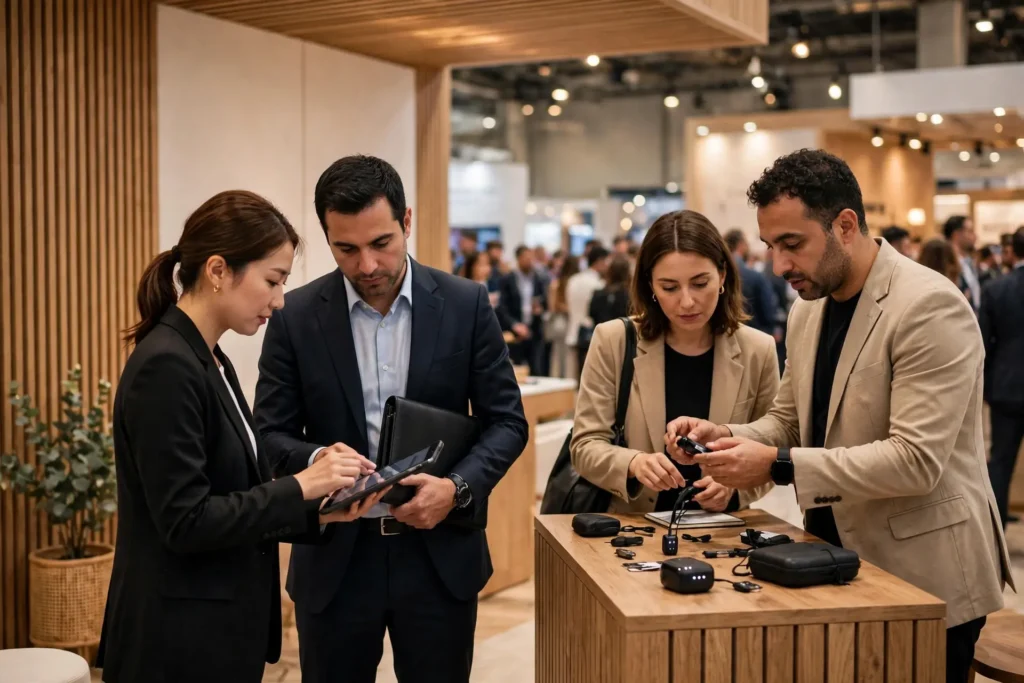
At a trade show, nobody owes your stand a visit. A working demo pulls people in because it gives them something to watch and then try. A short game tied to the product can help, as long as the game ends in a conversation and a lead form, not only in a prize.
Brief your team on lead capture first and on footfall second. That is lead generation at a stand, in its simplest form. Ten recorded leads with names and needs beat two hundred badge scans nobody follows up. Footfall alone proves little.
Launch nights sit at the other end. A rooftop venue, a guest list, and the product in use. This format suits premium goods and partner audiences and it needs fewer ideas, not more.
One reveal moment. One trial station. Room to talk.
Influencer led launches belong here too, with a warning. A creator can fill a room and still leave the product untouched if the event is built only around photos. Put the demo at the centre, let the creator try the product live and check permit status for paid content before anyone posts. In the UAE, influencer advertising now carries its own permit checks and brands share the risk when a post breaks the rules.
The prize game, with a permit check before you print anything
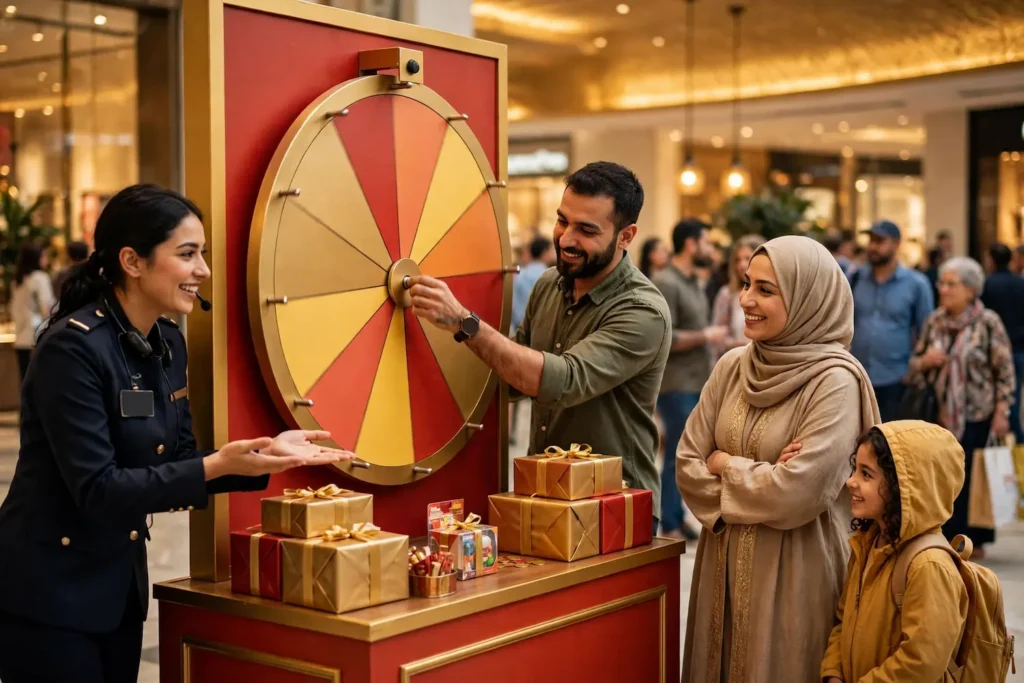
Spin the wheel games, scan and win draws and receipt upload promotions all work in Dubai malls. They give shoppers a reason to buy today and they produce entries you can count.
They also carry a rule the creative team cannot skip. In Dubai, promotions with prizes need a permit from the Department of Economy and Tourism and the venue adds its own approval on top.
Plan at least 30 days between filing and the start date and longer for a draw. Build the game only after the approval path is clear. A wheel that cannot legally spin is an expensive prop.
A roadshow, briefly
A branded vehicle takes one idea to several neighbourhoods in a set order. It suits drinks, snacks and services that need reach across the city rather than depth in one place. The team stays small and the script stays the same at every stop and the same small team can cover a supermarket car park on Friday and a community event on Sunday as long as the stock and the stand travel with them. Route and parking approvals decide the schedule, so fix those before you announce dates.
Which of these brand activation ideas should you pick?
Pick by objective, then test the idea against your product.
Trial and quick sales: sampling, in a mall or in store
A story told well: a pop-up
Business leads: an exhibition demo
Entries and repeat purchase: a prize game, after the permit check
Two formats get booked more often than they deserve. Rooftop launches impress guests, yet they do little for a mass market product that sells in supermarkets. Mascots draw families from a distance in a mall and the performer needs planned breaks because mall hours are long and costumes are hot.
In Dubai that detail is not minor. If your plan has no break cover, drop the mascot and spend the money on a second promoter.
Before you book a venue, write down three numbers. How many people you expect to take part each day. What that means in samples or demos per hour. And how many staff you need so the stand never stands empty.
If the numbers do not fit together, the idea is wrong, however good it looks in a render. Our guide on how to plan a brand activation walks through the timeline and budget side of that check.
Planning one of these formats in Dubai? Medialinks runs the concept, venue approvals, staffing and reporting as one team. Talk to our brand activation agency in Dubai with your goal and dates and we will suggest the format that fits your product and send a proposal within 24 hours.
Frequently Asked Question
Brand activation examples include a sampling counter in a mall and a pop-up shop with a product trial inside. You also see live demos on exhibition stands and scan and win games linked to a purchase. Each one lets the customer do something with the product instead of only seeing an ad.
The formats gaining ground are personalised moments, games that capture entries, and demos built for lead capture. Brands want participation they can count, not only a crowd in front of a stand. In Dubai, indoor formats also win for much of the year, because the heat limits where an outdoor stand can run.
Start with trial. A new food, drink, or beauty product usually does best with sampling, because people can judge it in seconds. If the product needs explanation first, use a pop-up or a demo counter where staff have time to talk.
A single sampling counter can run with one or two promoters plus supervisor visits during the day. A pop-up or exhibition stand needs a small team and a supervisor on site throughout. Plan cover for breaks from the start, so the stand stays staffed at peak hours.